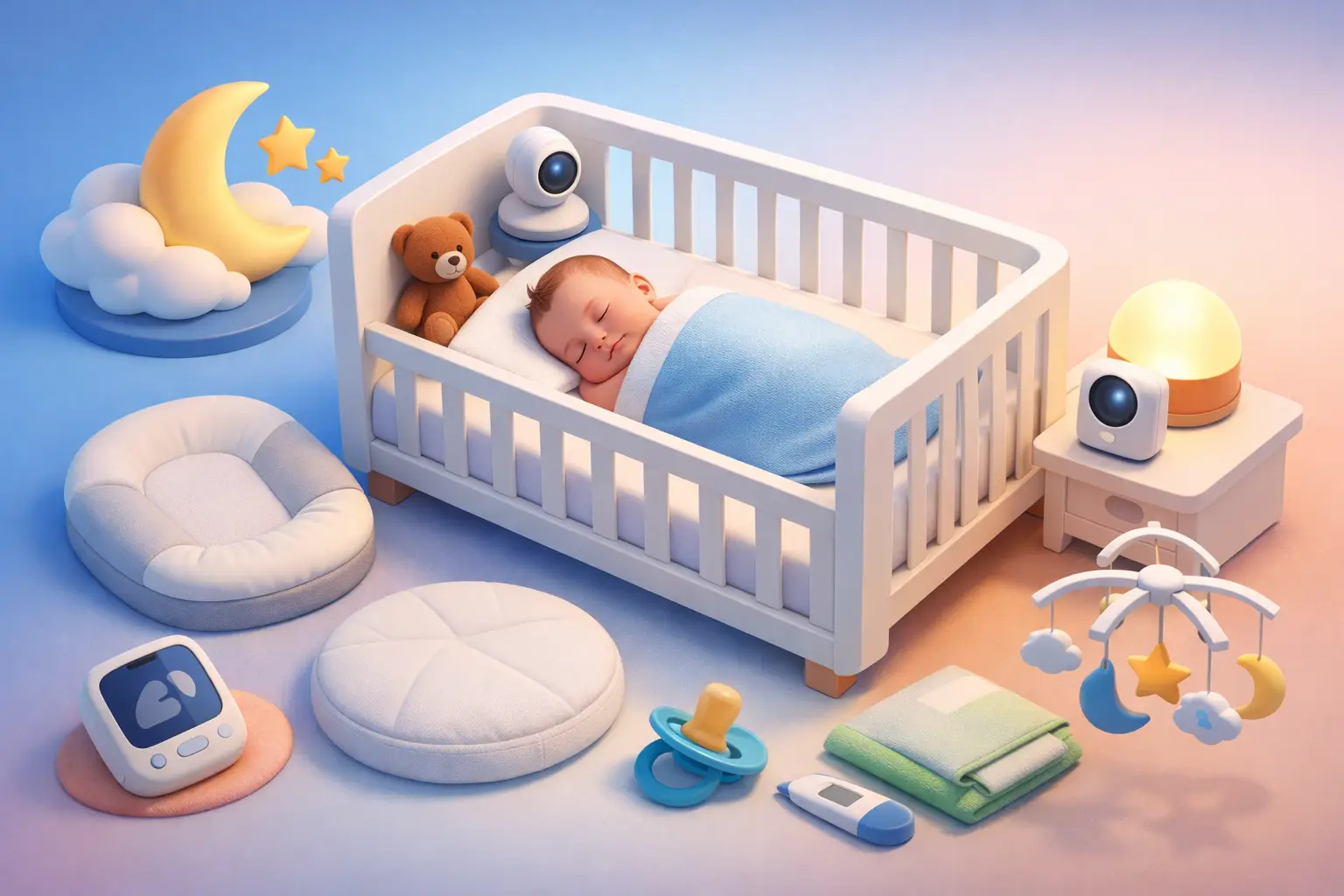
Those first nights can make every decision feel high stakes. Newborn sleep safety is not about creating a perfect nursery or watching your baby every second. It is about setting up a simple, consistent sleep space that lowers known risks, then returning to those basics when you are tired.
The guidance can feel repetitive because the safest arrangement is deliberately uncomplicated: your baby on their back, in their own clear, flat sleep space, in the same room as you. Once this is in place, you can focus on feeding, settling and getting the rest your household needs.
The safest place for a newborn to sleep
For every sleep, day and night, place your baby on their back in a cot, Moses basket or bedside crib with a firm, flat mattress that fits properly. Use a fitted sheet and keep the sleep space clear. Your baby should sleep in your room for at least their first six months, but on their own separate sleep surface.
A clear cot means no pillows, duvets, loose blankets, cot bumpers, soft toys, nests, pods or sleep positioners. These items may look cosy, but newborns cannot reliably move their heads away from soft material or free themselves if their face becomes covered. A bare sleep space can feel surprisingly sparse to a parent. That simplicity is a safety feature, not a sign that your baby is uncomfortable.
If you use a blanket, keep it lightweight, tuck it in securely no higher than your baby’s shoulders and place your baby with their feet at the foot of the cot. A well-fitting baby sleeping bag is another option once it is suitable for your baby’s size and age. Never use a weighted sleeping bag, swaddle or blanket.
Newborn sleep safety at the right temperature
Babies do not need a hot room to sleep well. Aim to keep the room comfortably cool, ideally around 16 to 20°C, and choose clothing and bedding that suit the temperature. Overheating is a recognised risk, so avoid hats indoors and remove outdoor layers before sleep.
Check your baby’s chest or the back of their neck, rather than their hands or feet, which often feel cool. If their chest feels sweaty or hot, remove a layer. If you are unsure what to use, start with one light layer more than you are wearing yourself, then adjust for the room rather than relying on a fixed rule.
Why back sleeping matters every time
Put your newborn down on their back for each sleep, even if they seem to settle more quickly on their side or tummy. Back sleeping keeps their airway in the safest position and is linked with a lower risk of sudden infant death syndrome, often called SIDS.
Some babies turn their head to one preferred side. You can gently encourage them to look the other way during awake, supervised time by changing the direction they lie in the cot or placing interesting things on their non-preferred side. Daily tummy time while your baby is awake and watched also supports head shape and early strength. Tummy time is playtime, not sleep time.
Once a baby can roll independently from back to front and front to back, you can leave them to find their own sleeping position. Continue to put them down on their back, keep the cot clear and do not use wedges or positioners to hold them in place.
Bed sharing needs an honest plan
Many parents feed, soothe or drift off with their baby in bed, particularly during frequent night feeds. It is better to prepare for this possibility than to assume it will never happen. The safest place is still a separate cot or bedside crib in your room, so return your baby there once you are ready to sleep.
Never bed share if you or anyone in the bed smokes, has consumed alcohol, taken drugs or medicines that cause drowsiness, or is extremely tired. Do not bed share if your baby was born prematurely or had a low birth weight. Sofas and armchairs are particularly unsafe places to fall asleep with a baby because of the risk of entrapment between cushions or against the adult’s body.
Keep your baby away from pillows, duvets and the edges of the bed, and make sure no other children or pets are present. If you think you might fall asleep while feeding, avoid settling into a sofa or armchair. Set up your room so that your baby’s own sleep space is close by and easy to use after a feed.
Equipment that is useful, and equipment that is not
A standard cot, Moses basket or bedside crib with a firm, flat, correctly fitted mattress is all your newborn needs for sleep. If you are buying second-hand, check that the mattress is clean, firm, dry and free from tears or damage. Follow the manufacturer’s assembly and age guidance carefully.
Car seats, prams, bouncers and swings are designed for transport or supervised use, not routine sleep. A baby may fall asleep while travelling, and that is understandable. When you arrive, move them to a clear, flat sleep space as soon as practical. Their head can fall forward in a seated position, which may affect breathing, especially in very young babies.
Home monitors can offer reassurance, but they do not prevent SIDS and cannot replace safe sleep practices or adult care. If a monitor helps you feel calmer, use it as an extra tool rather than a safety guarantee. The same applies to apps and sleep logs: tracking feeds, naps and night wakes can reveal useful patterns, but the sleep environment remains the foundation.
Swaddling and dummies: small choices, clear boundaries
Some newborns settle well when swaddled. If you choose to swaddle, use a lightweight material, keep it snug around the chest but loose around the hips and legs, and always place your baby on their back. Do not cover their head, do not use weighted products and stop swaddling as soon as your baby shows any attempt to roll.
A dummy at the start of a sleep may reduce the risk of SIDS. If you are breastfeeding, many families prefer to wait until feeding is established before introducing one. Do not force it if your baby refuses, and if it falls out once they are asleep, there is no need to put it back. Never attach a dummy with a cord, ribbon or necklace during sleep.
Keep smoke away from your baby
Not smoking during pregnancy and keeping your baby’s environment smoke-free are among the most meaningful protective steps you can take. Smoke exposure includes cigarettes, vapes and smoke that clings to clothing, hair, furniture and cars. Ask visitors to smoke well away from your home and baby, and to wash their hands afterwards.
This can be a sensitive subject, especially when someone is trying to cut down or stop. The goal is not judgement. It is a safer environment and practical support for every adult caring for your baby.
When sleep concerns need medical advice
Newborn sleep is noisy, active and often unpredictable. Grunting, brief startles and irregular breathing can be normal, particularly in light sleep. But trust your instincts if something seems wrong.
Seek urgent medical help if your baby is struggling to breathe, has blue, grey or very pale lips or skin, is unusually floppy, is difficult to wake, has a seizure or has a temperature of 38°C or above if they are under three months old. Call 999 in an emergency. For less urgent worries, speak to your GP, midwife, health visitor or NHS 111.
A safer sleep routine does not need to be elaborate. Before you lie down, pause for a quick check: back, clear cot, firm flat mattress, comfortable room, baby nearby. That quiet routine gives you something dependable to lean on when the night feels long - and leaves more space for the tender moments that matter, too.